

How to Repair Your Skin Barrier from Constant AC Exposure in the UAE
Long hours in air-conditioned offices, cars, and homes is a common part of everyday life in the UAE. While it does relieve you from the unbearable heat, it might affect your skin in ways you never imagined possible.
Even if you moisturize every morning, you might experience roughness, flaky patches and sensitivity. One of the most common reasons behind this is that the air around you could be dry, letting moisture escape your skin much more easily. Also, your skin barrier plays a key role in retaining moisture and protecting your skin from external irritations. When it gets irritated, your usual skincare no longer feels adequate and comfortable as it used to.
Let’s first understand what happens to skin with prolonged AC exposure.
How Does Air Conditioning Affect Your Skin Barrier?
Air conditioning cools indoor spaces and often reduces humidity. As the surrounding air holds less moisture, water evaporates from your skin easily and causes tightness and dryness. This is easy to notice when you spend most of your day moving between air-conditioned environments, especially when you don’t take a break from the indoor air.
But AC cannot be the only reason for your skin barrier. Excess exfoliation, harsh cleansers, unsuitable skincare products, and conditions like eczema can also cause dryness and irritation.
Signs Your Skin Barrier May Need Attention
If you experience the following regularly, it is probably time to get a gentler skin routine:
- Tightness after cleansing: Your face feels uncomfortable or stretched after washing.
- Flaking or rough patches: Certain areas of your skin appear dry or uneven.
- Increased sensitivity: Products that previously felt comfortable now cause stinging.
- Redness or irritation: Your skin looks inflamed or feels uncomfortable.
- Persistent dryness: Moisturising provides only temporary relief.
These symptoms don’t automatically mean your skin is compromised. They may occur wth other issues. So persistent symptoms need special attention.
How to Repair Your Skin Barrier Step by Step
1. Switch to a Gentle Cleanser
Review the cleanser you use every day. Products that make your face feel unusually tight, squeaky clean or irritated may be harsh for your skin.
Pick a gentle cleanser suited to your skin type and wash it off with lukewarm water rather than hot water. Do not scrub your face aggressively or cleanse more frequently than needed. If your skin is already irritated, keep your cleansing routine simple until it feels comfortable again.
2. Moisturise While Your Skin Is Slightly Damp
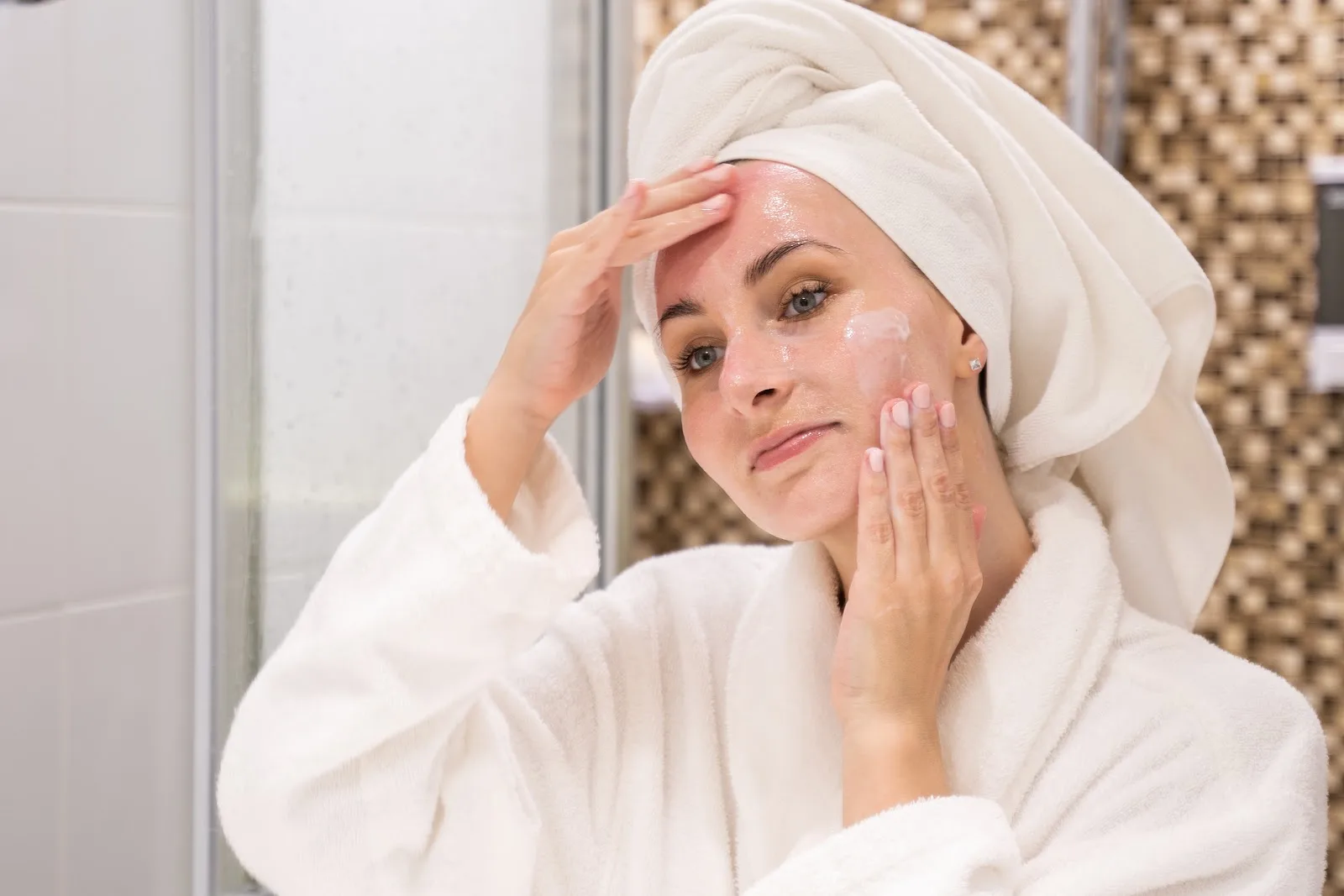
Moisturising is one of the most useful steps when dealing with AC-related dryness. Apply your moisturiser soon after washing, while your skin is still slightly damp. This helps your skincare routine retain moisture more effectively.
Look for products containing ingredients such as:
- Glycerin: Attracts water to the skin.
- Ceramides: Help support the skin’s natural protective barrier.
- Hyaluronic acid: Helps bind water in the skin.
- Occlusive ingredients: Such as petrolatum, which help reduce moisture loss.
You do not need an expensive product or a complex routine. A well-formulated moisturiser that fits your skin and feels comfortable is good to go.
3. Temporarily Reduce Harsh Exfoliation
If the skin feels irritated, adding more active ingredients may make the problem worse.
Pause it or reduce exfoliating acids, scrubs, and other products that cause stinging or redness. If you use prescription skincare, consult your healthcare professional before changing your treatment. Once your skin feels comfortable again, you can see which products are necessary and reintroduce suitable ones slowly.
4. Keep Sunscreen in Your Morning Routine
Sun protection is still relevant if you spend time indoors. UV exposure can always happen during commutes, breaks, or time spent near windows. Use SPF-30 or higher sunscreen that is also broad-spectrum, especially when you spend time outdoors.
5. Make Your Indoor Environment More Skin-Friendly
Making adjustments to your surroundings can also make it more skin-friendly. Take the following steps:
- Do not sit directly in the path of cold AC airflow when possible.
- Keep indoor temperatures comfortable rather than excessively cold.
- Consider a humidifier if your indoor environment is consistently dry, while maintaining it properly to prevent mould and microbial growth.
- Drink water regularly throughout the day to maintain normal hydration.
- Avoid repeatedly washing your face simply because you feel uncomfortable.
Key Takeaways
- Air conditioning can cause dry skin by lowering indoor humidity and increasing moisture loss.
- Harsh cleansers, excessive exfoliation and underlying skin conditions can also irritate.
- Gentle cleansing and regular moisturising are the foundations of a barrier-supporting routine.
- Ceramides, glycerin and suitable occlusive ingredients can help support moisture retention.
- Avoid introducing multiple new products when your skin is irritated.
- Persistent redness, burning, itching or cracking warrants professional assessment.
Frequently Asked Questions
Air conditioning can contribute to skin dryness because it lowers indoor humidity. This can increase moisture loss from the skin.
Use a gentle cleanser, apply moisturiser regularly, reduce irritating exfoliants and use sunscreen during the day. Also avoid direct AC airflow when possible.
It depends on the cause and severity of the irritation. Mild dryness may improve after several days of gentle skincare, while more persistent irritation can take longer. If symptoms persist, consult a dermatologist.
Ceramides, glycerin and suitable occlusive ingredients such as petrolatum can help support the skin barrier and reduce moisture loss.
You may benefit from using a moisturiser consistently, avoiding harsh cleansing and limiting products that cause irritation.
Low indoor humidity can contribute to dryness, tightness and discomfort.
Aloe vera may offer soothing hydration in suitable formulations, but it is not a substitute for a complete moisturising routine.
Cleanse first, then apply moisturiser. Moisturising while your skin is slightly damp can help retain moisture.
If your skin is tight, stinging, peeling or irritated, pause or reduce exfoliation until it feels comfortable. Exfoliating can worsen irritation.
Seek professional advice if dryness is persistent, symptoms worsen, or you experience major redness, itching, burning, cracking or recurring rashes.