

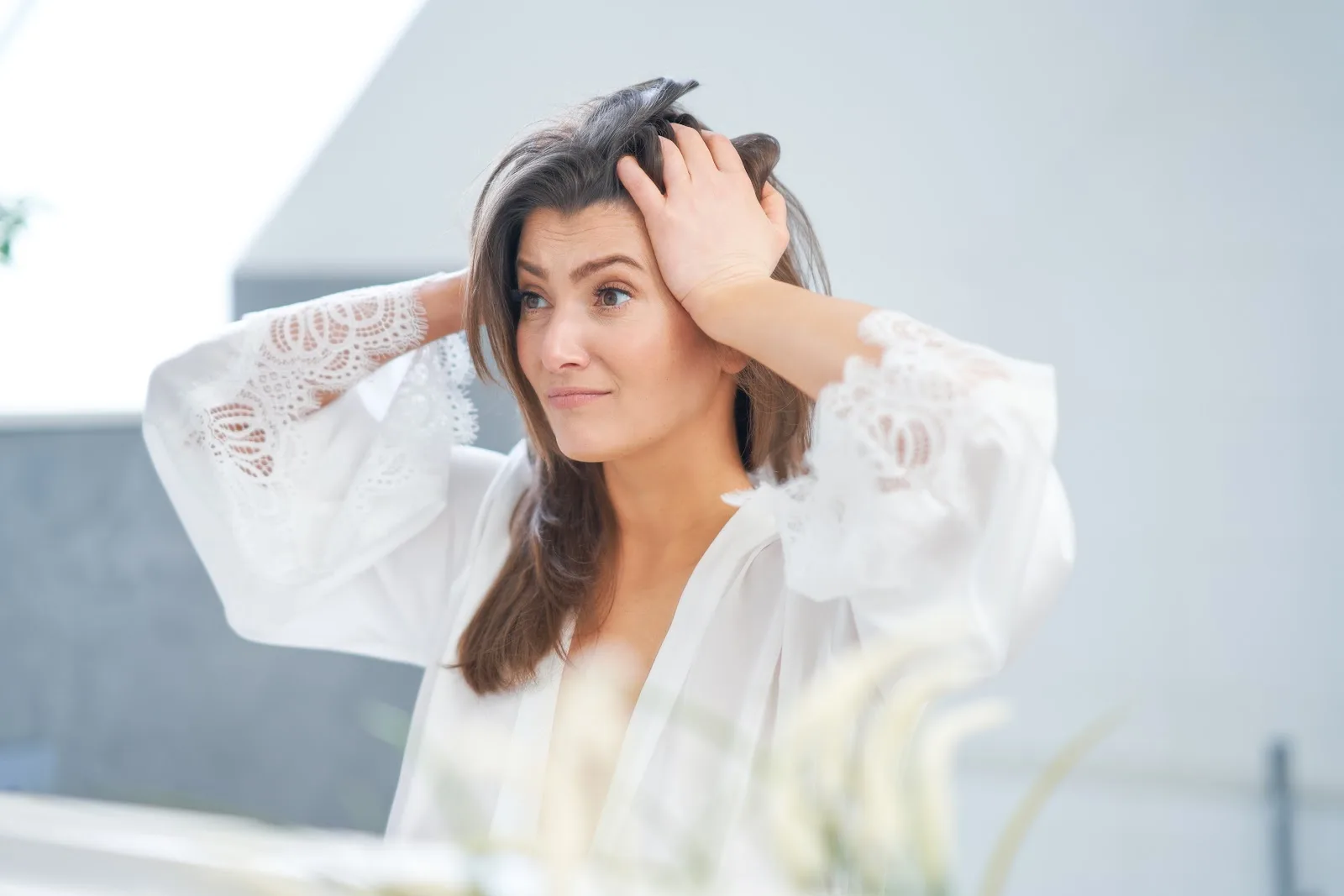
Why Does My Dandruff Get Worse in Dubai’s Weather?
You step outside into Dubai’s air, and in under minutes, within minutes, your scalp starts feeling sweaty. And then you go and spend the rest of the day inside air-conditioned rooms. By the time it’s evening, your scalp may feel dry, itchy, or uncomfortable. And those familiar white flakes always return.
Does this sound familiar?
Well, Dubai’s weather doesn’t always cause dandruff, but the combination of heat, air conditioning, sweating, and dust, along with changes in scalp moisture, can make your existing scalp problems more severe. Let’s understand what is happening so that you can adjust your hair care routine accordingly.
Why Can Dubai’s Weather Affect Your Scalp?
Dandruff can have a wide variety of causes, such as dry skin, oily skin, sensitivity to hair care products, or a yeast called Malassezia that naturally lives on the scalp. It could also be associated with seborrheic dermatitis. Your environment can also influence how your scalp feels, even though it might not be the only reason for your dandruff. So here are some important factors you should consider.
1. Heat and Sweating
Dubai’s high temperatures can make you sweat a lot, especially if you travel outdoors, exercise, and spend time outside.
But sweat alone doesn’t mean you’ll develop dandruff. But sweat can irritate an already sensitive scalp, and the salt in the sweat might trigger flare-ups. And in some people, this could lead to seborrheic dermatitis.
If your scalp feels uncomfortable after long outdoor days, cleansing it at the end of the day might help remove sweat and buildup.
2. Air Conditioning Can Dry Your Scalp
Dubai’s climate has another side to it, that is air conditioning. Multiple hours in air-conditioned offices, cars, and homes might leave the skin dry, since the surrounding air is low in humidity.
While a dry scalp and dandruff might look similar, they’re not the same things. Dry scalp is related to loss of moisture, while dandruff comes from oily skin and seborrheic dermatitis. This is why adding more oil or washing your hair more often is not always the solution.
3. Dust and Product Buildup
Dust and pollution are a big part of everyday life in cities like Dubai. On top of that, you add styling products, sweat, shampoo, hair oils, and your scalp might feel less and less fresh by the end of the day.
The goal is to not scrub your scalp aggressively, but to clean properly without unnecessarily irritating it.
4. Need for a Different Routine
The same hair washing routine might not work equally throughout the year. If you exercise regularly and commute outdoors, or sweat heavily, you might need to cleanse more often than someone who spends their day mostly indoors.
Having said that, washing too aggressively or using extremely hot water might irritate your dry scalp. The right frequency is all about your lifestyle, hair type, and scalp type.
How Should You Care for Dandruff in Dubai?
Keep Your Scalp Clean
Wash your hair regularly, depending on how sweaty or oily your scalp usually becomes. Use shampoo mainly for the scalp and massage gently with your fingertips.
Don’t Scratch Flakes Away
Scratching away flakes might irritate the scalp further.
Avoid Overloading Your Scalp
Using too much oil or styling products or scalp products might also not help with the dandruff. Choose products based on what you exactly need.
Pay Attention to Your Environment
If you notice that your scalp is getting too uncomfortable after outdoor exposure or workouts or long hours in the air conditioning, it can help you understand why you get these flare-ups.
What About Ayurvedic Hair Care for Dandruff?
Ayurvedic hair care usually focuses on regular scalp care using herbal ingredients and consistent routines. Note that you should not assume every scalp problem needs more oil or more products. If you are using an Ayurvedic anti-dandruff product, strictly follow its recommended usage.
Expert Advice
Don’t Blame the Weather Alone
Dubai’s climate will influence how the scalp feels, but dandruff has multiple causes. So do not blame the weather alone, but check for your hair care habits, scalp type, and skin conditions.
Sweat Doesn’t Mean You Shampoo Aggressively
If you are someone who sweats heavily, cleansing might remove excess sweat and buildup, but aggressive scrubbing is also bad for your scalp.
Understand the Difference Between Dandruff and Dry Scalp
Flaking does not always mean dandruff. Dry scalp and dandruff might look similar, but they have different approaches.
Don’t Ignore Constant Scalp Problems
If your dandruff doesn’t improve with regular dandruff care and you develop redness, inflammation, or constant itching, speak with a dermatologist.
Key Takeaways
- Dubai’s heat and sweating can make an already sensitive scalp feel more uncomfortable.
- Long hours in air conditioning may lead to scalp dryness.
- Dust, pollution, and product buildup can affect how fresh your scalp feels.
- Dandruff has many possible causes, so weather is not always the main reason.
- Avoid aggressive scrubbing and excessive product use.
- Choose your washing frequency according to your scalp, hair type and lifestyle.
- If persistent dandruff or scalp irritation continues, consider professional evaluation.
Frequently Asked Questions
Heat does not automatically cause dandruff. It is sweating and environmental changes that make an existing scalp problem more severe.
Sweat can irritate the scalp and may cause flare-ups in some people, particularly those with seborrheic dermatitis.
Spending long periods in dry indoor air can contribute to skin dryness. If your scalp feels tight, dry and flaky, check if dryness is the real cause rather than dandruff.
There is no universal rule as to when you should wash hair. Your washing frequency should depend on your scalp type, hair type, lifestyle and how much you sweat.
Dust is not seen as a direct cause of dandruff, but environmental buildup can make the scalp feel less clean and comfortable.
Not always. Flaking may have different causes, so adding more oil is not necessarily the right solution.
Wet your hair thoroughly, apply an appropriate amount of shampoo, massage the scalp gently with your fingertips and rinse thoroughly.
Ayurvedic hair care can definitely be part of a regular scalp-care routine. Choose products according to your scalp needs and follow their recommended usage.
They may look similar. Dandruff usually comes with flaky scalp and may be linked to seborrheic dermatitis, while dry scalp is related to loss of moisture. If you are unsure, a dermatologist can help identify the cause.
If dandruff persists despite regular care, becomes severe, or is accompanied by significant itching, redness, inflammation, sores or hair loss, professional help is recommended.